
Istanbul Voice Center
Specialist care for voice, swallowing and laryngeal disorders. An independent subspecialty institute where clinical care, research and training sit under one roof, directed by a single focus: the larynx and the functions it governs.

Assoc. Prof. Necati Enver
Founder & Director
300+
office-based procedures a year, without general anaesthesia
NewYork-Presbyterian
Laryngology fellowship, Weill Cornell and Columbia
European Laryngological Society
Board member and Media Committee director
Rouen Course
Faculty, Laryngeal Reinnervation Course
Tell us what brings you here
Three simple routes into the site, so you do not need to know the medical terminology first.
Voice
I have a voice problem
Hoarseness, vocal fold lesions, scar, dystonia and other voice disorders. Start with the condition, and we will explain the options.
→
Performers & speakers
I am a professional voice user
Singers, actors, broadcasters and teachers. Care planned around your voice, your work and your next performance.
→
Specialist pathways
I have a complex or specialised laryngeal condition
Vocal fold paralysis, R-CPD, swallowing disorders and other problems that need a coordinated program.
→
Coordinated care for defined problems
A program is a clinical pathway around a specific problem: how we assess it, which treatments we consider, and how we choose between them.
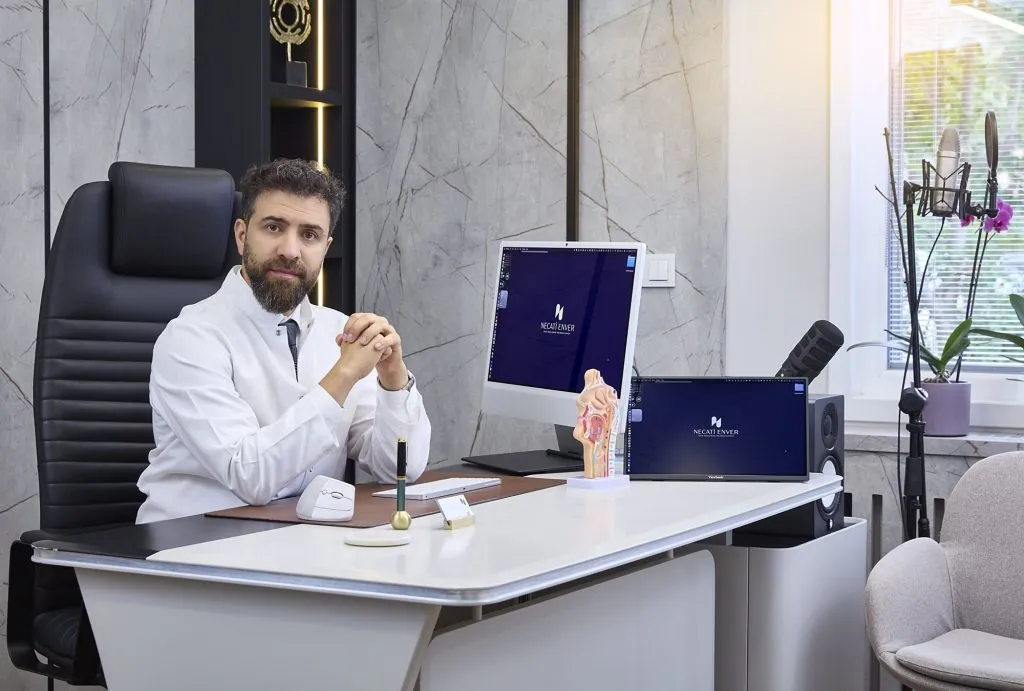
Flagship program
Vocal Fold Paralysis & Reinnervation
The full range of options, from injection to laryngeal reinnervation, matched to the patient rather than to a single technique.
Explore the program
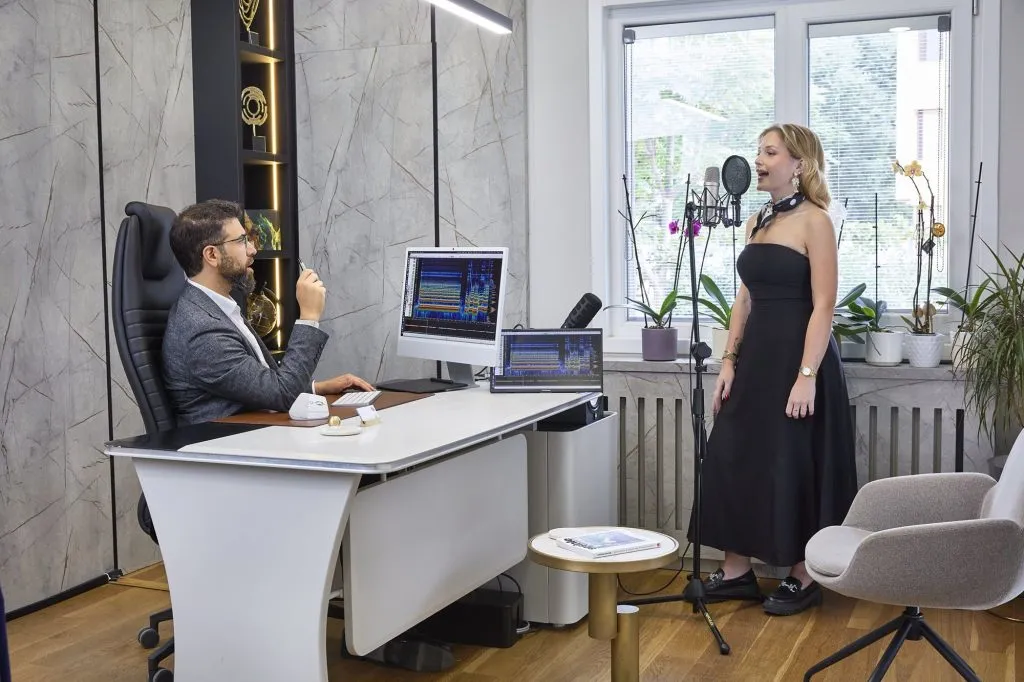
Flagship program
Professional Voice
Assessment and care for singers, actors and voice professionals, built around reliability, endurance and return to performance.
Explore Professional Voice
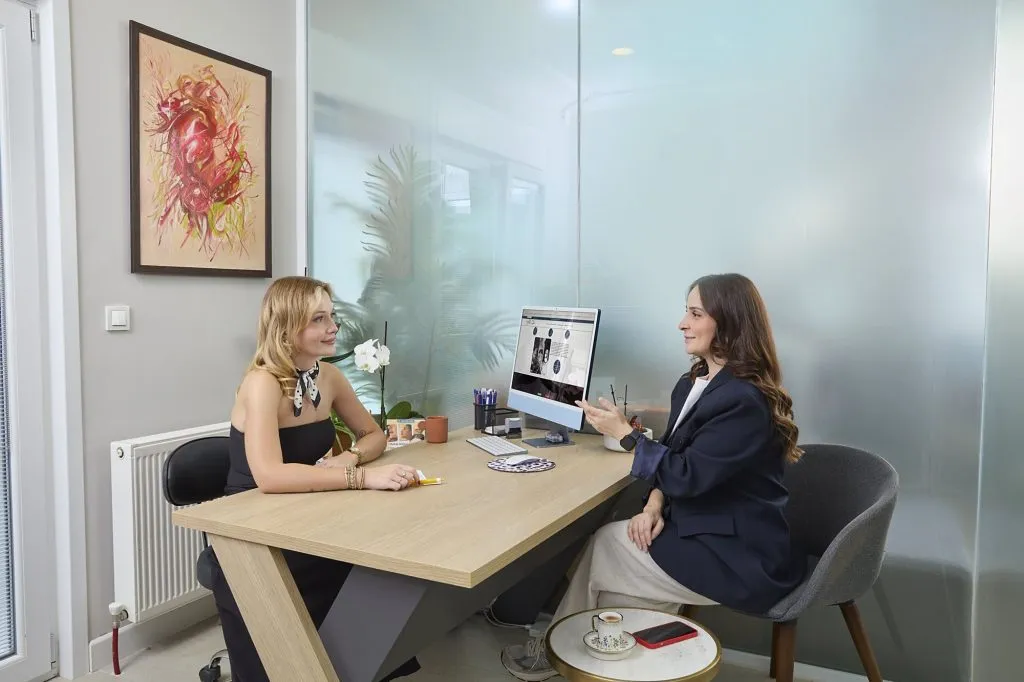
Flagship program
R-CPD / No-Burp Program
The inability to belch: recognised, diagnosed and treated with a targeted injection. Often completed within a short visit.
Explore the program
Swallowing Program
Dysphagia, cricopharyngeal dysfunction and Zenker's diverticulum, assessed by looking directly at the swallow.
Learn more
Gender-Affirming Voice
A plan the patient leads: assessment and voice therapy first, pitch modification surgery where chosen.
Learn more
Laryngeal & Voice Surgery
Phonosurgery, office-based procedures and surgery for precancerous and malignant lesions.
Learn more

Focused entirely on the larynx, voice and swallowing
Most voice and swallowing problems are managed inside general otolaryngology, where they compete for attention with the ear, the nose, the sinuses, and the head and neck. We took the opposite path. By narrowing scope to one organ system, we concentrate volume, instrumentation, and expertise on a smaller set of problems, and we go deeper on each of them.
Subspecialty focus
One organ system, treated every day.
Advanced laryngeal evaluation
Stroboscopy, acoustic analysis and instrumented swallowing assessment.
Surgical and non-surgical options
Therapy, office-based procedures and surgery, chosen case by case.
Professional voice expertise
Care that weighs every decision against the demands of performance.
Complex case management
Paralysis, reinnervation, R-CPD and cases other clinics refer on.
Academic and research activity
Clinical questions become published research and teaching.
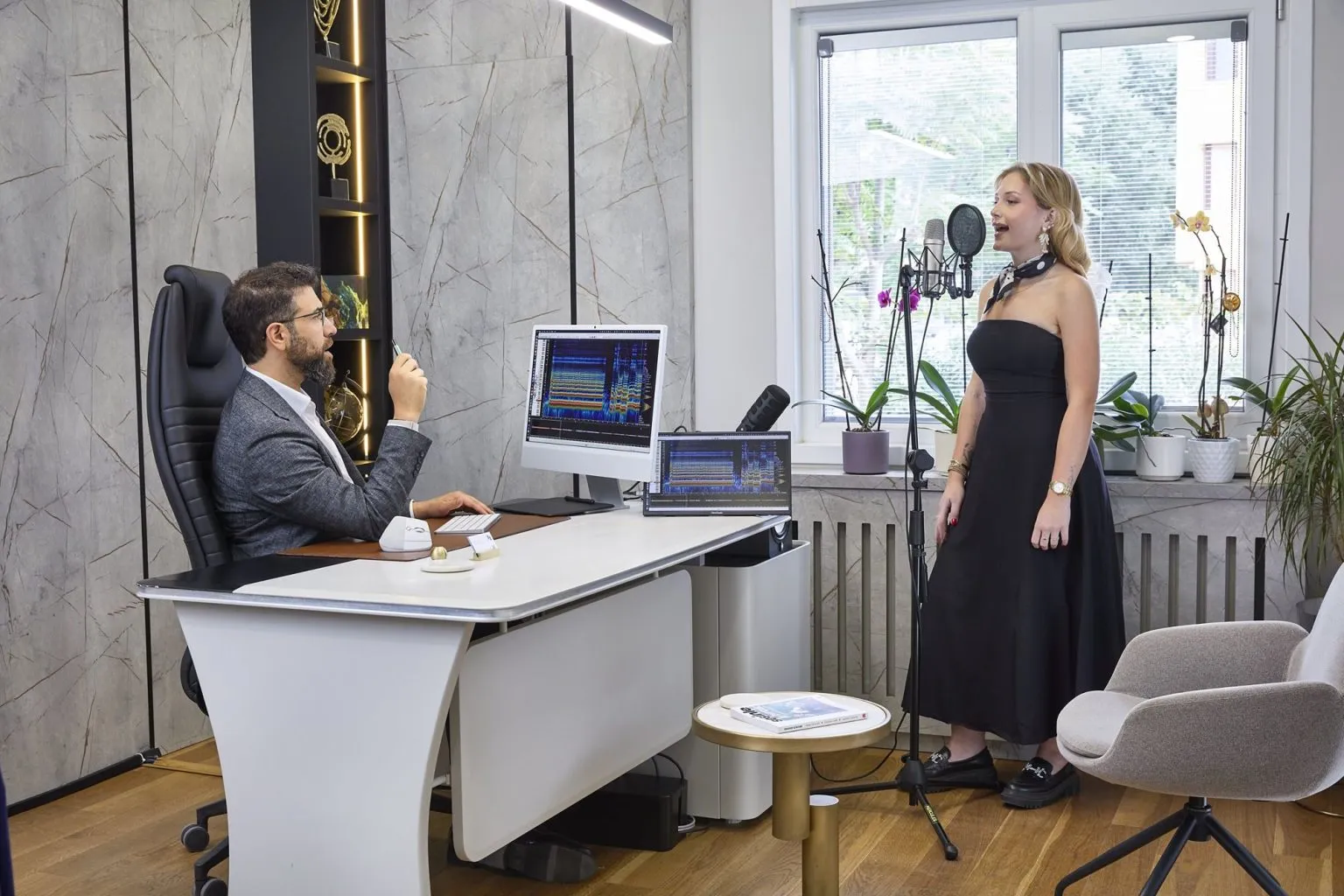
When your voice is part of your profession, "normal" may not be enough
A trained voice has its own normal. A change that matters on stage can sit comfortably inside a population average, and a treatment that is fine for most people may be wrong for a singer mid-season. Our professional voice program starts from what your voice is asked to do, and from the date of your next performance.
The Professional Voice Check-Up records more than thirty parameters of a healthy working voice, so that any later change is measured against you rather than against an average.
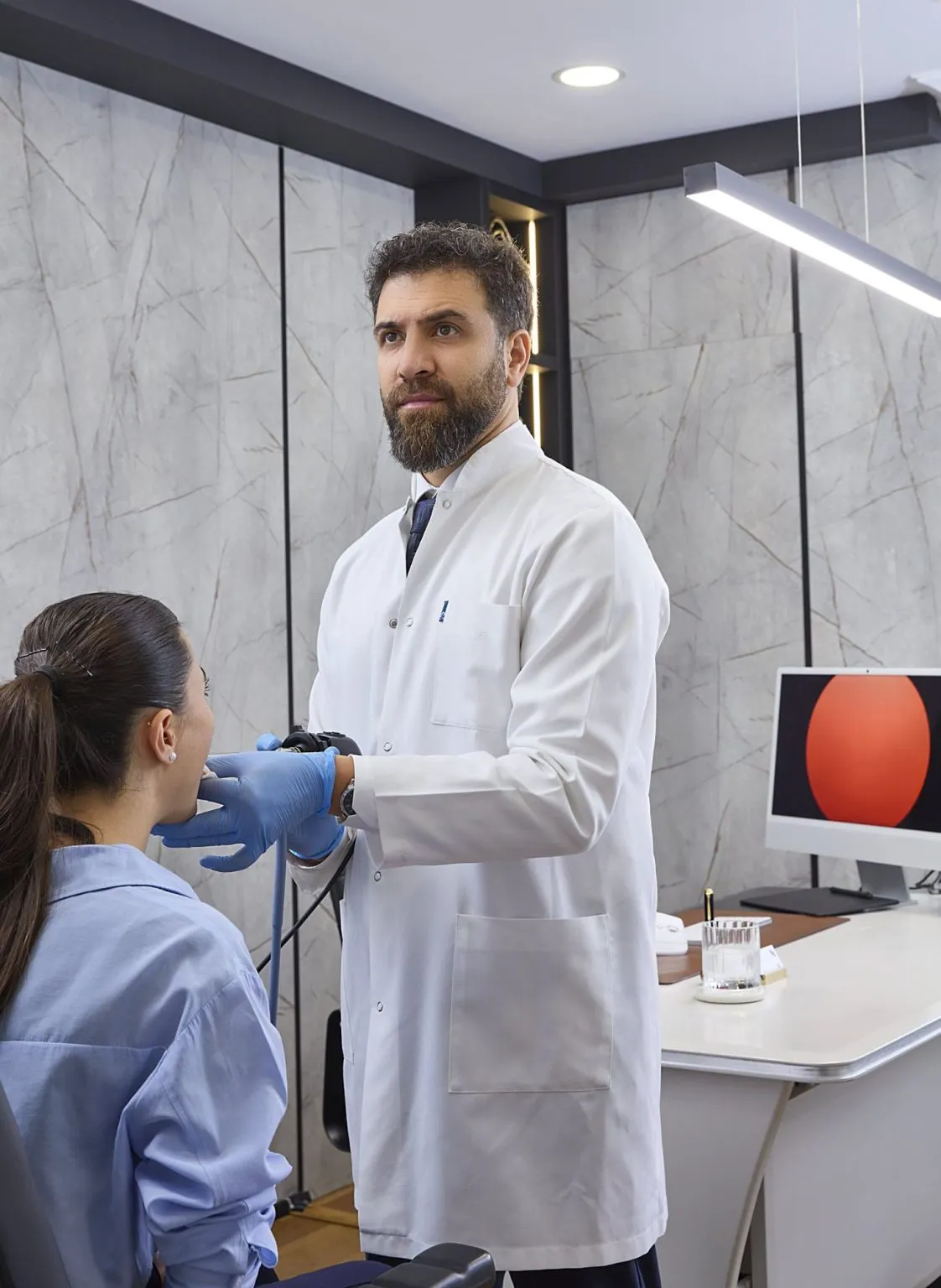
Vocal fold paralysis does not have a single treatment
A paralysed vocal fold can be managed in several ways: temporary injection, framework surgery, or laryngeal reinnervation, which restores a nerve supply to the muscle. A clinic that offers one technique tends to fit the patient to the technique. We keep the full range available, and the plan depends on:
A clear pathway from anywhere
Patients travel to İstanbul from abroad for specialist voice and swallowing care. The process is designed so that you know what a visit involves before you commit to it.
Send information
Your history, reports and any examination recordings.
Case review
We review the records and tell you honestly whether travel is worthwhile.
Appointment planning
A specific plan, length of stay and fees before you book anything.
Visit and treatment
Assessment in person, and treatment where appropriate.
Follow-up
Continued care by video and shared recordings after you return home.

Necati Enver, MD, FEBORL-HNS
Founder and director · Laryngologist and academic
Associate Professor Necati Enver trained in laryngology at NewYork-Presbyterian Hospital (Weill Cornell and Columbia). He holds Board and Media Committee roles at the European Laryngological Society, and is one of a small number of surgeons worldwide who perform laryngeal reinnervation, teaching the technique as a faculty member of the Rouen Laryngeal Reinnervation Course.
The institute is built around a clinical team, with a laryngologist for diagnosis and intervention, speech and language therapists for rehabilitation, and coordinators who keep each pathway moving.
The people behind your care
A laryngologist for diagnosis and intervention, speech and language therapy for rehabilitation, and coordinators who keep each pathway moving.
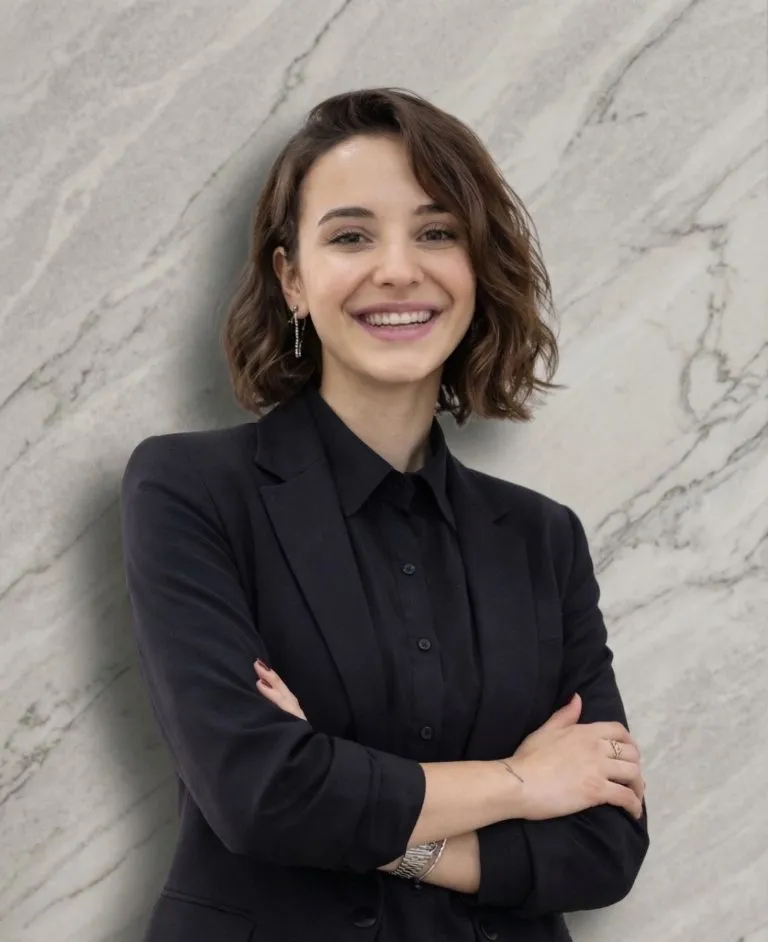
Çağla Erol
Clinical Coordinator

Gökçe Nur Sütbeniz
Patient Communication Lead
Care, research and training, connected
Clinical work generates questions. Research answers them and feeds back into practice. Training passes both on to the next clinician. We do not publish patient testimonials: for an academic audience, the more useful evidence is method, reasoning and measured outcomes.
01
Publications
Peer-reviewed work on sulcus vocalis, office-based laryngology, laryngeal dystonia and artificial intelligence.
Learn more
02
Research areas
Four lines of clinical research, each rooted in questions that arise in clinic.
Learn more
03
Observership
One to four weeks observing a subspecialty laryngology practice, without a fee.
Learn more
04
The Laryngology Brief
A monthly digest of recent laryngology literature, with editorial commentary.
Learn more
A clinic designed around voice and swallowing
Istanbul Voice Center is in Kadıköy, on the Asian side of İstanbul. The rooms, the equipment and the schedule are organised around one organ system.
 Patient lounge
 Consultation & examination
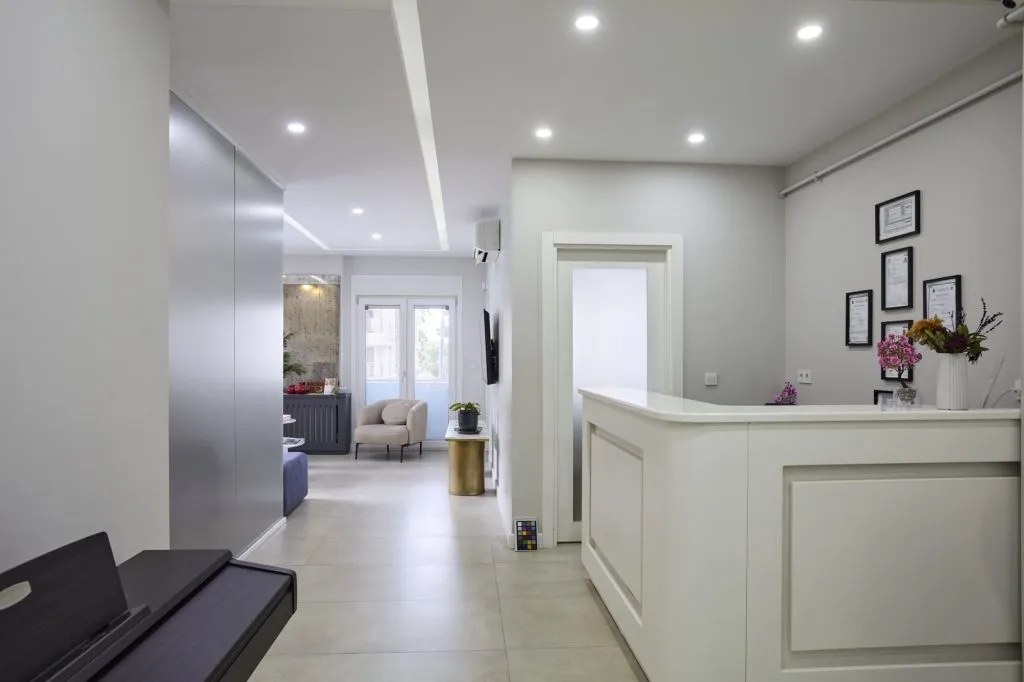 Reception
01
Equipped for the larynx
Stroboscopy, acoustic analysis and instrumented swallowing assessment in the same clinic.
02
Office-based treatment
A treatment room for awake procedures, so many patients avoid an operating theatre.
03
Calm and considered
A quiet space in Kadıköy, organised so appointments run on time.
Clear answers, written by specialists
Plain-language guides to the conditions we see most often, reviewed by the institute's director.
Hoarseness: when a changed voice needs examining
The common causes, the warning signs, and why a hoarse voice lasting more than a few weeks should be looked at.
Read guide
Can't burp? R-CPD explained
Why some people cannot belch, what it feels like, and how a targeted injection treats it.
Read guide
Singing with a cold, voice rest and other questions
Plain answers to the questions singers and actors ask most often.
Read guide
Frequently asked questions
Browse common questions by area of care.
How long is too long to be hoarse?
If hoarseness lasts more than three to four weeks without an obvious cause that is settling, the vocal folds should be examined. Professional voice users, smokers, and anyone with pain, breathing or swallowing difficulty, or a neck lump should be seen sooner.
Do vocal fold nodules need surgery?
Rarely. Voice therapy is the first-line treatment, and surgery is considered only when nodules persist and still affect the voice after an adequate course of therapy.
Can a paralysed vocal fold recover on its own?
Some do, particularly in the first months after a nerve injury. This is why temporary injection augmentation is often used to restore a usable voice while spontaneous recovery is still possible.
Is an office-based vocal fold procedure painful?
Most patients describe it as uncomfortable rather than painful. The nose and throat are numbed with a topical anaesthetic beforehand, and the procedure usually takes between five and twenty minutes.
Is the inability to belch a real medical condition?
Yes. R-CPD is a recognised and treatable condition. It remains under-recognised, and many patients have been told for years that the problem was psychological.
How soon after the R-CPD injection will I be able to belch?
Most patients begin to belch within one to two weeks, sometimes for the first time in their lives. Some need to persist before the reflex establishes, and a minority need a second injection.
What is a FEES test?
Flexible endoscopic evaluation of swallowing passes a thin endoscope through the nose to watch the swallow directly while the patient eats and drinks. It shows where the swallow is failing and how unsafe it is.
When should a singer or actor see a laryngologist?
When hoarseness, loss of range, or vocal fatigue persists beyond a couple of weeks, or when a change appears that affects performance. Acting early is usually what prevents a cancelled engagement.
Why have a voice check-up if nothing is wrong?
Because the most useful comparison, what your own voice looked and sounded like when it was working well, only exists if it was recorded.
Will I have to stop performing if I have a voice problem?
Not always. Many problems resolve with therapy and adjusted technique. Where a procedure is needed we schedule it around performance commitments when that is safe.
What language are consultations held in?
English. Interpreting support for other languages can be arranged if you tell us in advance.
How long do I need to stay in İstanbul?
It depends on the treatment. A visit for an R-CPD injection usually needs one to two days; pitch modification surgery needs a minimum of three days. We give you a specific plan before you book travel.
Can my case be reviewed before I travel?
Yes. Send your reports and any recordings of a previous laryngeal examination. We tell you what we would advise, and whether an in-person visit is worthwhile, before you book travel.
Need a specialist voice or laryngeal evaluation?
Tell us briefly what is happening. We reply with the next step, usually within one business day.